
by Norman Aceron Garcia
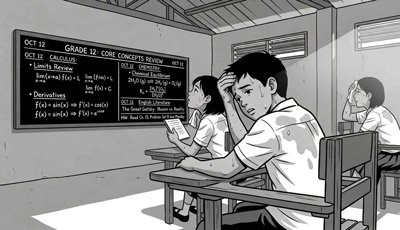 Since the brutal dry season of 2024, the Philippines has faced a public health and educational crisis fuelled by extreme heat. Unprecedented heat waves have forced the Department of Education to repeatedly suspend in-person classes nationwide, leaving millions of students falling further behind their regional counterparts. This crisis has exposed a systemic vulnerability: our buildings, specifically our schools, are simply not designed for the climate we now inhabit.
Most classrooms are fundamentally incapable of handling excessive thermal loads, leading to widespread reports of heatstroke and dehydration among students and teachers. For many Filipino families, this design failure creates a heartbreaking choice between cooling their homes and putting food on the table. This is the definition of energy poverty, where exorbitant utility costs for inefficient cooling compromise basic survival and a child’s education.
We cannot afford to wait years for slow-moving bureaucratic updates to national building codes. The responsibility for change falls squarely on the shoulders of architects, engineers, and developers to proactively transform the construction sector. The industry already possesses the knowledge of building physics and the technical tools to make climate-resilient choices today. Adopting the Passive House standard is the next logical step in our professional evolution to protect our students.
In our tropical climate, relying on air conditioning in a thermally leaky building is a losing battle. It creates clammy, mould-prone environments and places an enormous strain on the national power grid. Furthermore, we must look critically at “net-zero” claims. Installing solar panels on a poorly insulated school structure does not make it sustainable; it only masks fundamental inefficiencies. Real sustainability requires efficiency as a non-negotiable first principle.
Winning the fight against intense heat and humidity requires a focus on high-performance building envelopes. This means prioritizing continuous insulation, rigorous airtightness strategies, high-performance glazing, and adequate ventilation before considering renewable offsets. Using technology to mask the energy losses of a standard concrete building does not make it high-performance; it only makes it more expensive. Filipino ingenuity is recognized globally, and it is time to apply that mastery at home to ensure our schools remain safe havens for learning. By raising the bar for construction, we can build a cooler, healthier, and more sustainable future together.
Norman Garcia is a certified Passive House Consultant with the AllClimate Consulting and founder of the Passivhaus Philippines.