
 |
|
|
by Norman Aceron Garcia
MANILA, Philippines – As global temperatures soar and energy systems come under increasing strain, Passivhaus Philippines is calling for a nationwide shift toward ultra-efficient, climate-resilient buildings. In a webinar held on October 25, 2025, the organization presented how Passive House principles can dramatically cut cooling demand, stabilize indoor comfort, and strengthen the country’s resilience to extreme heat and humidity.
Only a few Passive House projects have been completed in very hot climates worldwide, but the Philippines stands to benefit significantly from adopting the standard. Many of the required technologies – high-performance windows, certified ventilation systems, and airtight construction materials – are already accessible through regional suppliers. The technology is already there – we just have to put it together.
Designed for the tropics
Though the Passive House Standard originated in Germany, it includes climate-specific criteria for warm and humid regions. In the Philippines, the challenge is not heating but managing high temperatures and moisture levels.
Conventional air conditioning lowers temperature but often fails to adequately reduce humidity, which limits comfort. Passive House design addresses both heat and moisture by combining airtightness, continuous insulation and energy-recovery ventilation (ERV) systems.
By maintaining controlled humidity levels, indoor spaces remain comfortable even when temperatures are higher than in typical air-conditioned environments.
Working alongside green building standards
Passive House is complementary to programs such as the Philippine Green Building Council’s BERDE rating system and the Advancing Net Zero Philippines initiative. While these frameworks evaluate broader sustainability categories, Passive House focuses deeply on envelope performance and operational energy. The Passive House approach is building-envelope-first, Passive House does not compete with green building standards – it complements them.
Prioritizing efficiency before solar
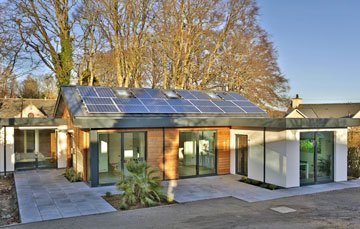
Passivhaus Philippines cautioned against relying solely on rooftop solar to achieve net-zero buildings if the underlying structure leaks energy. If the building is not efficient, and you put solar panel there, you’re just wasting energy. The conditioned air just dissipates into the air leakage locations.
Solar panels are most effective when installed on an already efficient building, because the renewable energy is used more effectively.
Building momentum
Passivhaus Philippines noted that while the Philippines does not yet have a certified Passive House building, interest is growing. Local mechanical suppliers, including companies carrying energy-recovery ventilators, have begun preparing for increased demand.