
by Norman Aceron Garcia
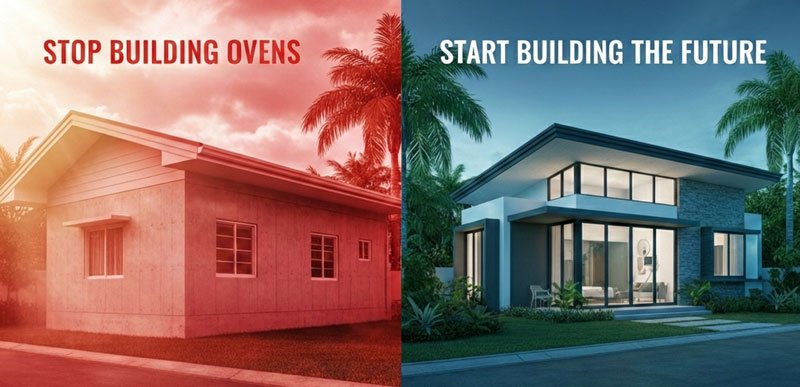
With record-breaking heatwaves and escalating cooling demands placing unprecedented pressure on the national grid, Passivhaus Philippines has officially launched its 2026 education series with a transformative webinar: Stop Building “Ovens”: An Introduction to Passive House.
The session, led by industry experts including Emilio De Leon – the first-known Filipino Certified Passive House Designer practicing in Toronto, Canada – addressed the urgent need for a nationwide shift toward ultra-efficient, climate-resilient buildings. By introducing science-based passive house principles, the organization aims to fulfill its mission of ensuring all Filipinos live and work in healthy, low-carbon structures by 2050.
“The technology is already here, we just have to put it together,” the speakers emphasized. The presentation outlined the five core pillars of the standard: continuous insulation, thermal bridge-free design, airtight construction, high-performance windows, and fresh air ventilation. Unlike traditional designs that often trap heat, the passive house approach prioritizes a “building-envelope-first” strategy to dramatically reduce cooling demand and stabilize indoor comfort.
The webinar featured global insights from professionals in the United Kingdom, Australia, and Panama, alongside case studies from Thailand and Sri Lanka. These international perspectives demonstrated that the passive house standard is not only achievable but highly effective in tropical monsoon climates, where high humidity and extreme heat are constant challenges.
Technical presentations also showcased climate modelling highlighting increased typhoon activity and rising temperatures, positioning passive house buildings as critical climate adaptation solutions. The speakers noted that the standard does not compete with existing green building ratings but complements them by ensuring the building actually performs as designed.
Following the successful introductory session, Passivhaus Philippines is doubling down on its commitment to professional development. The organization is currently establishing a technical roadmap and certification resources to upskill the local workforce, bridging the gap between international standards and local construction practices.
Passivhaus Philippines is a non-profit association of volunteer stakeholders dedicated to promoting highly energy-efficient and low-carbon building standards. Through education and advocacy, the organization works to create a resilient, sustainable built environment for the Philippines. Professionals and stakeholders interested in contributing to this transition are encouraged to visit www.passivhausph.org for more information on technical resources and advocacy initiatives.